
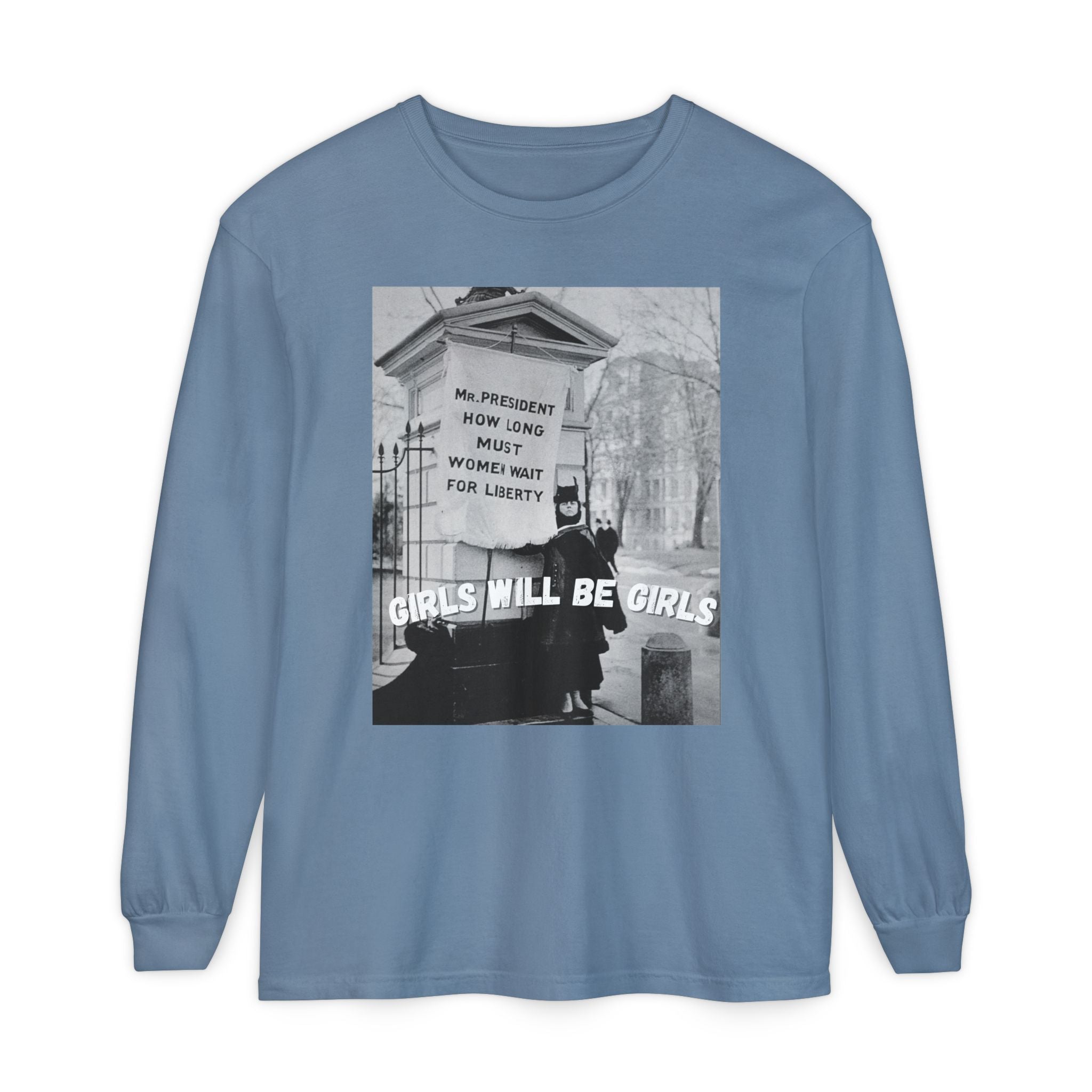
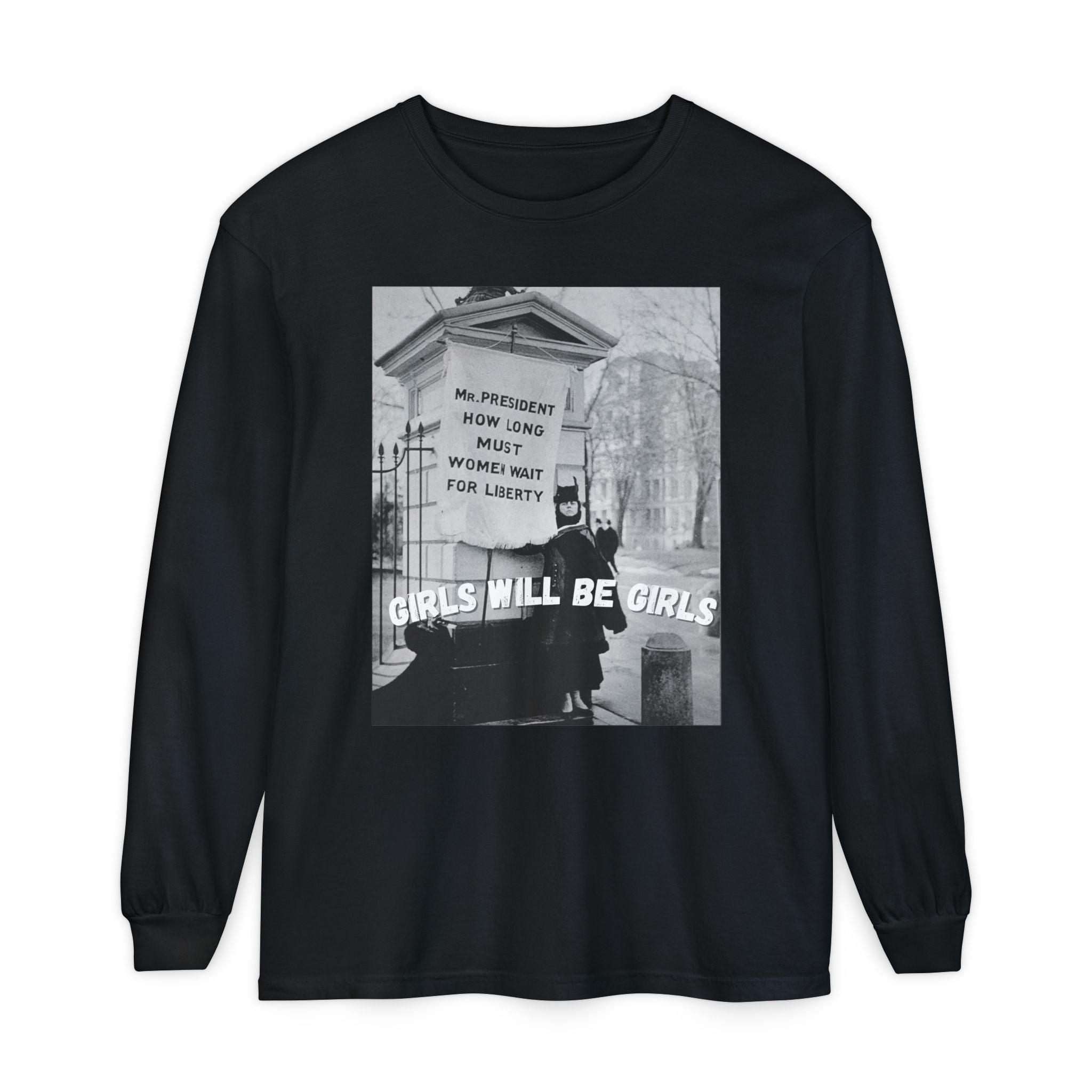
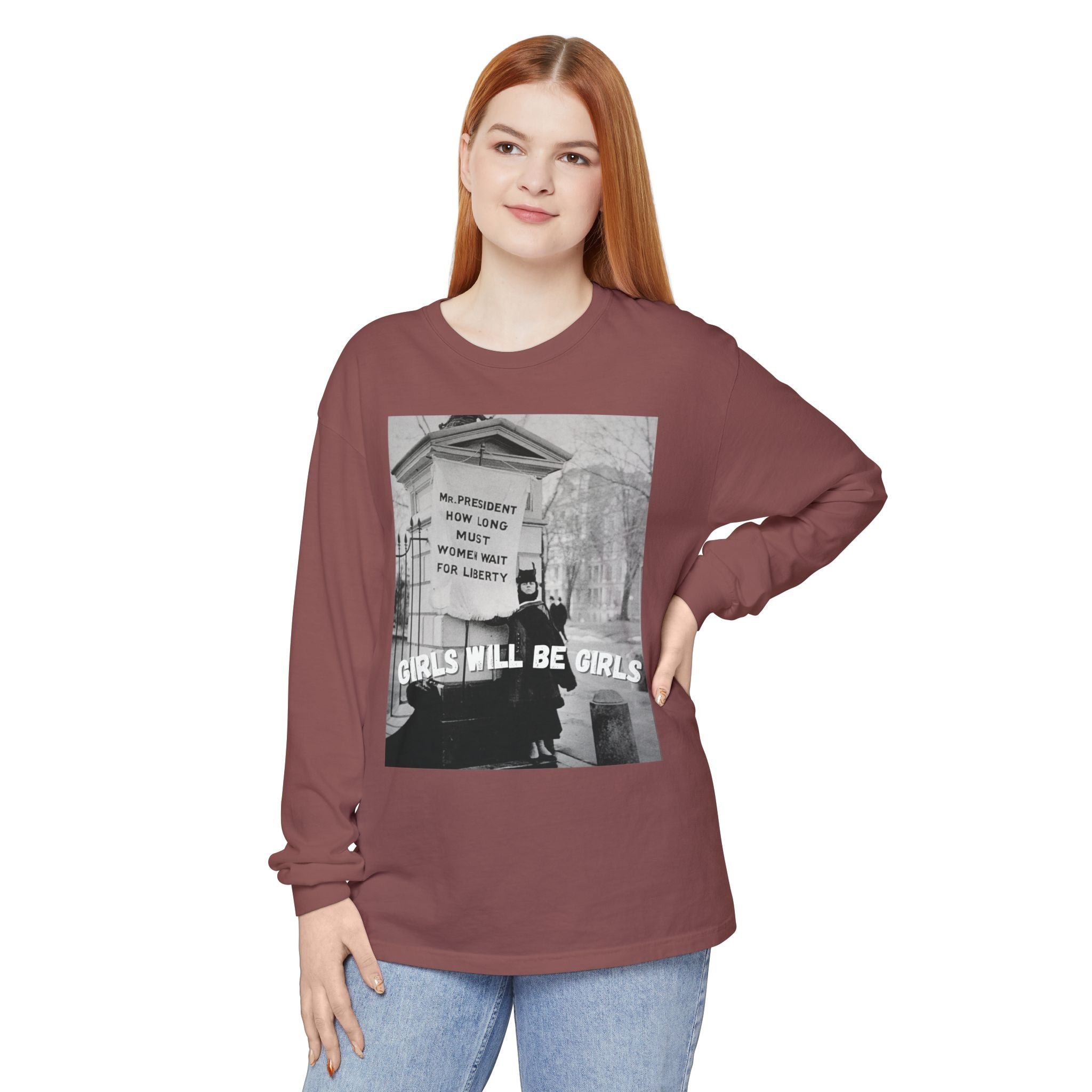
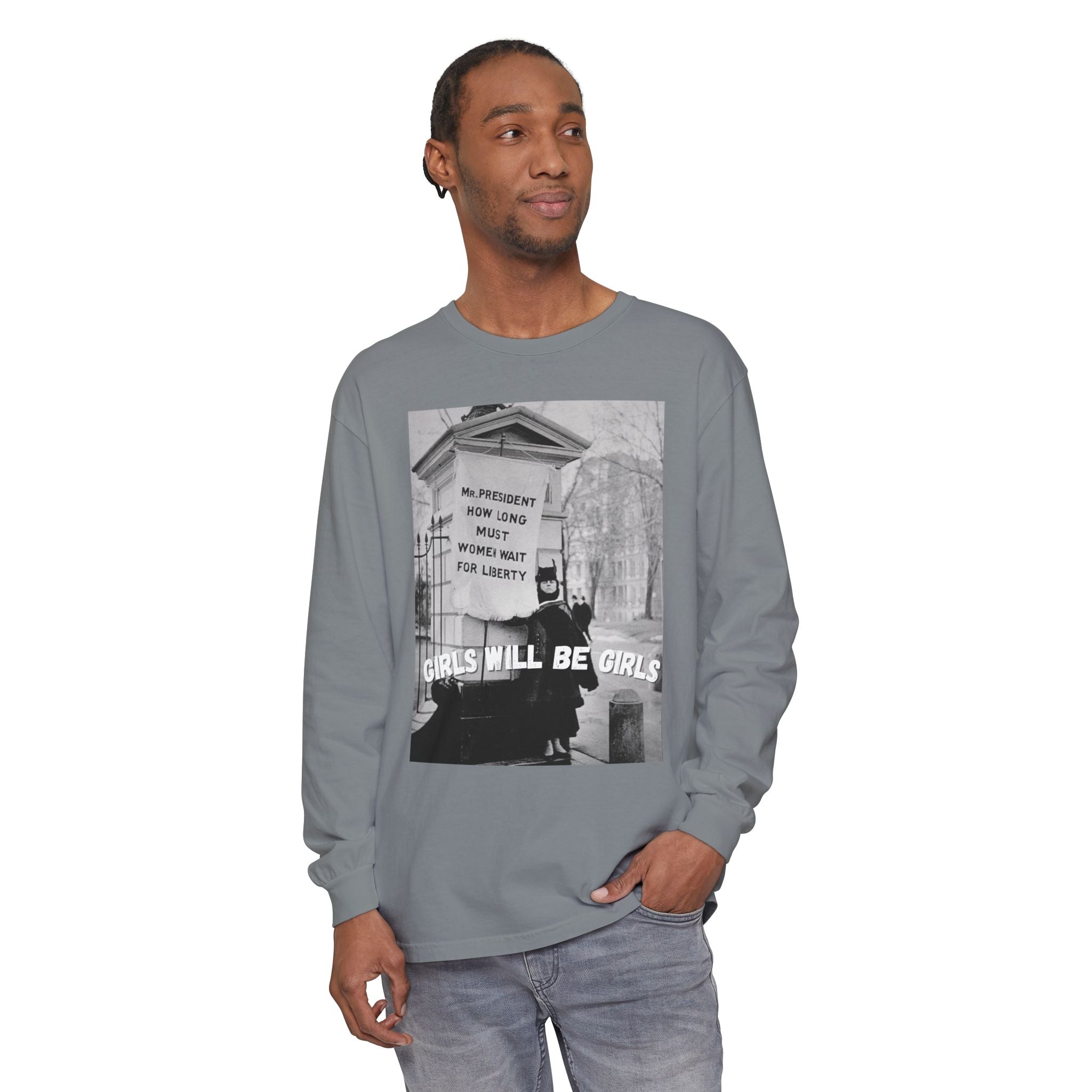
"Frustrated with President Woodrow Wilson's inaction on woman suffrage, the National Women's Party (NWP) began picketing in front of the White House to press for voting rights for women; they were the first political activists to do so.
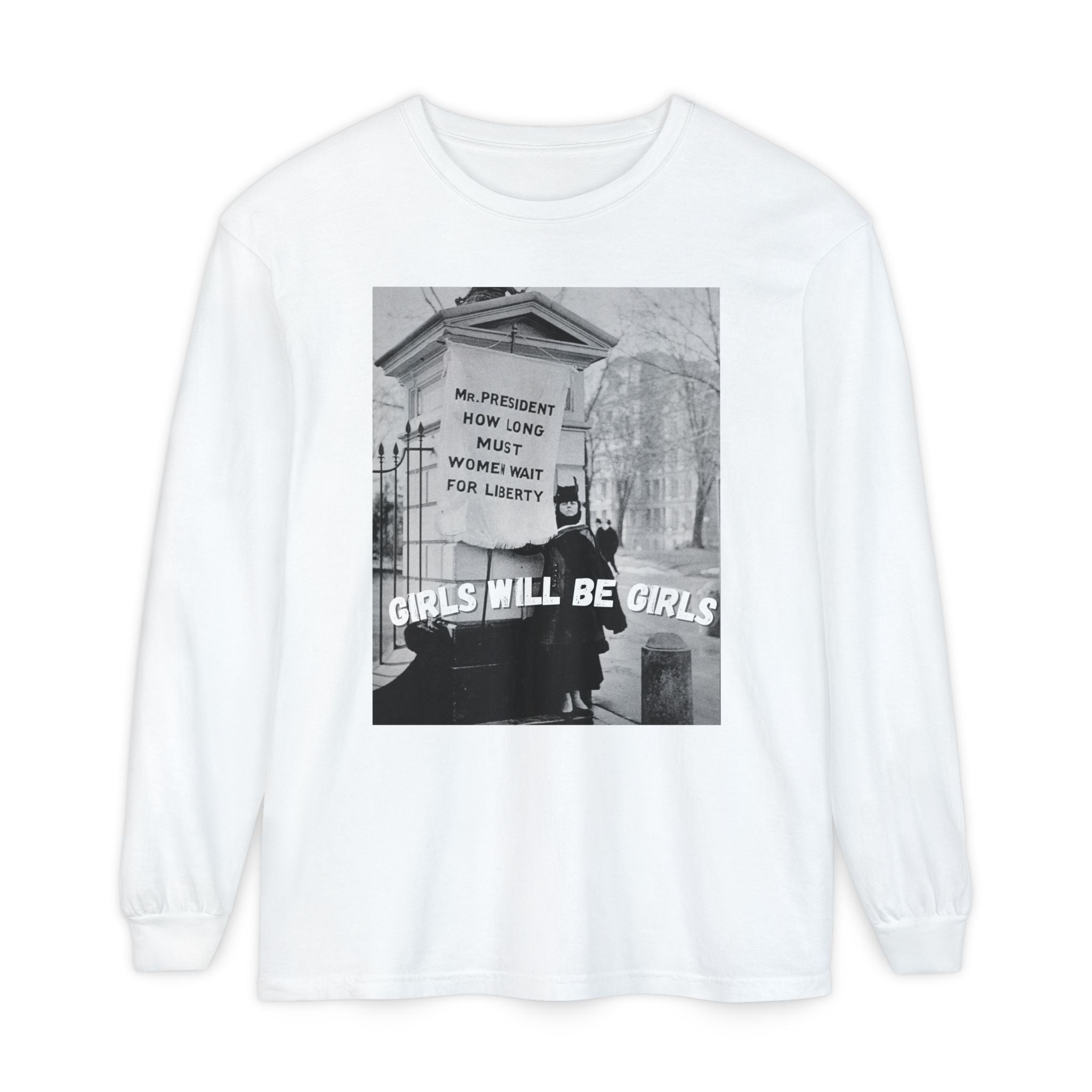
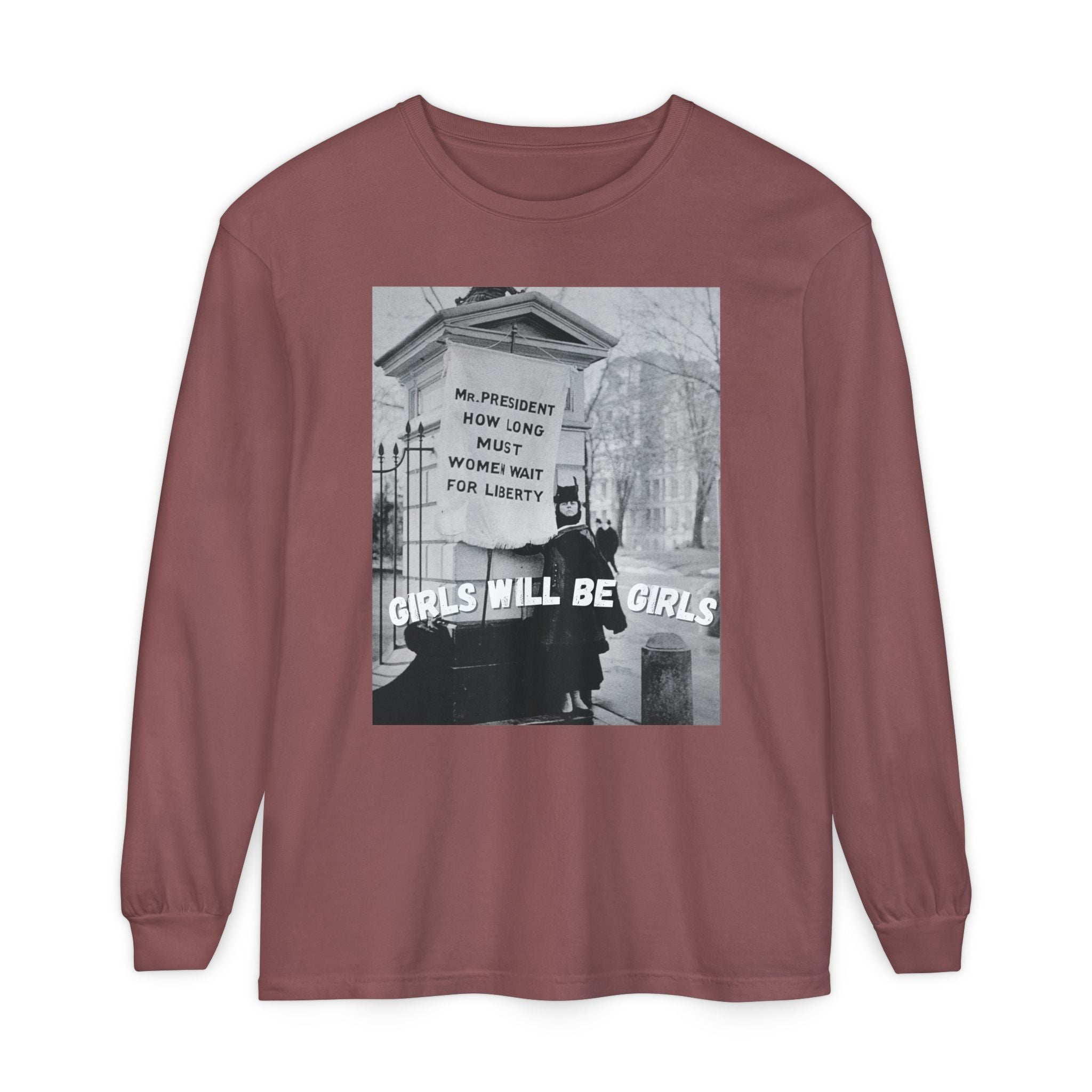
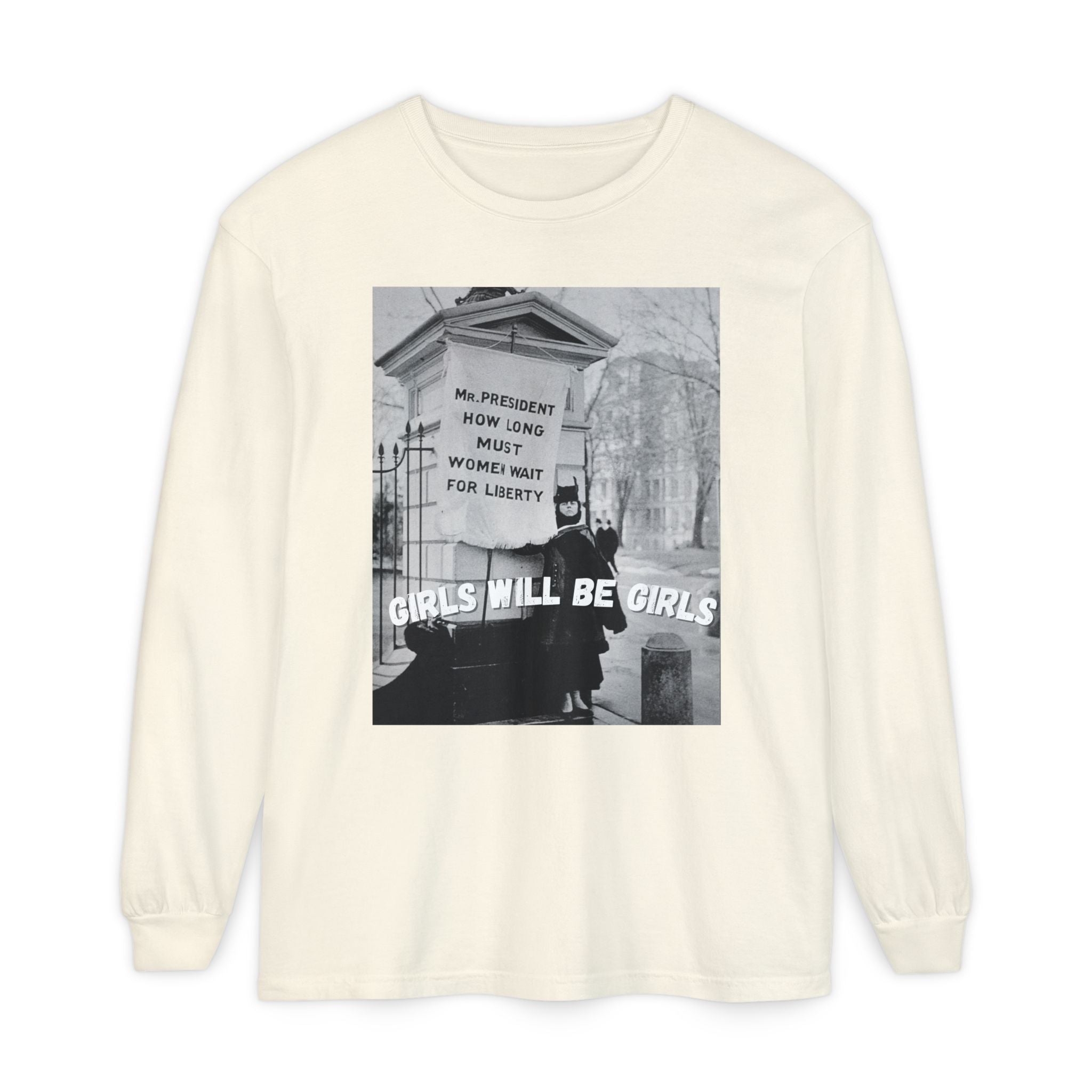
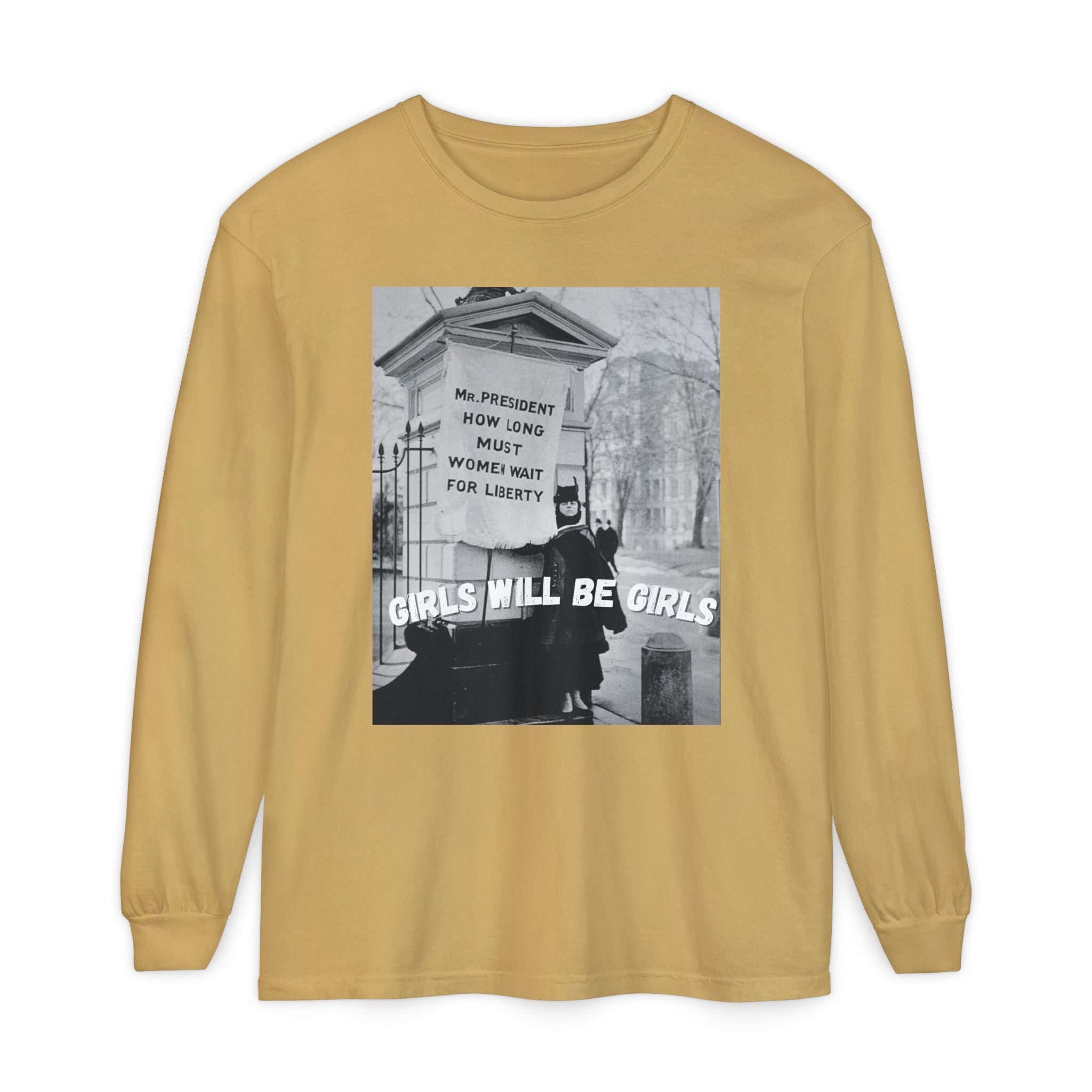
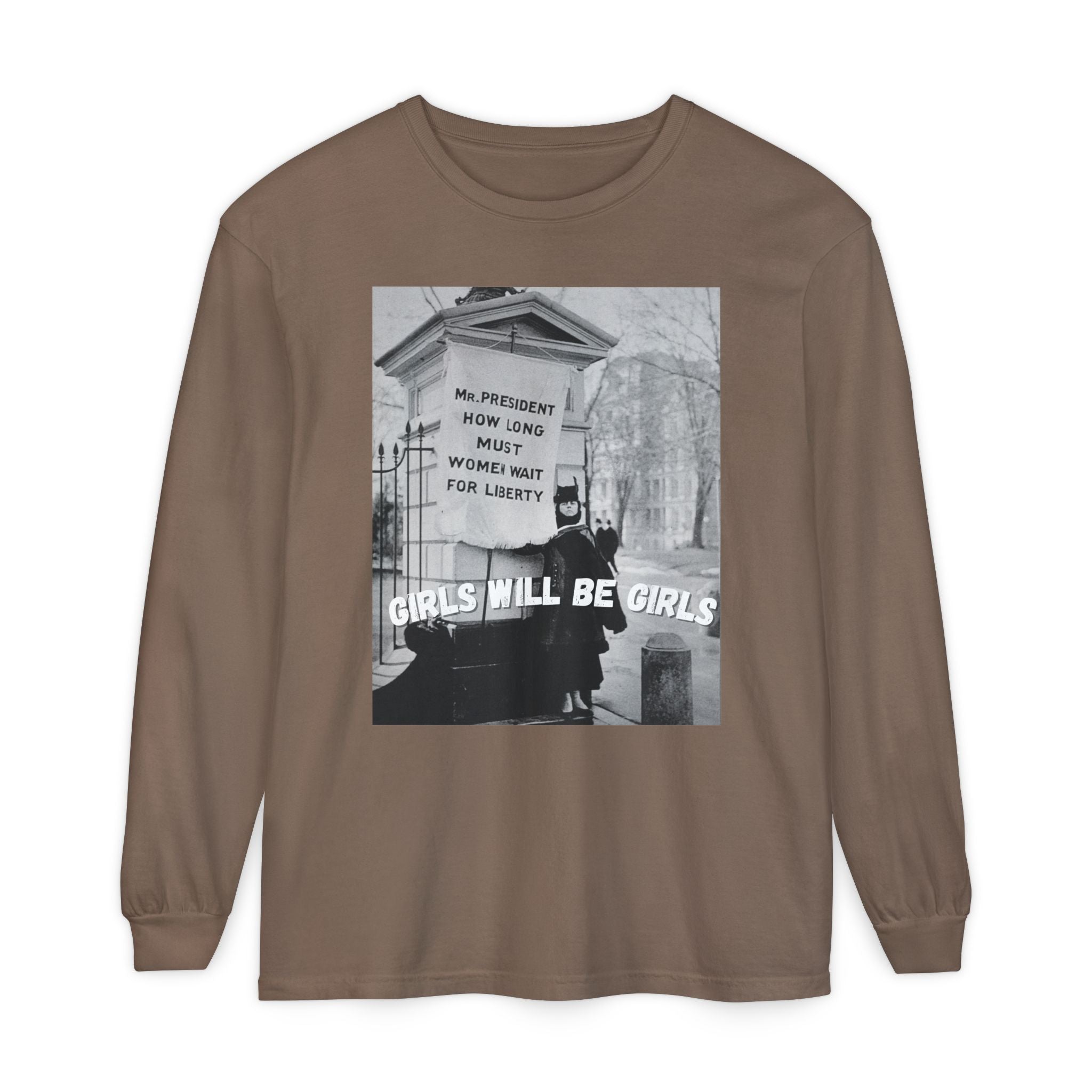
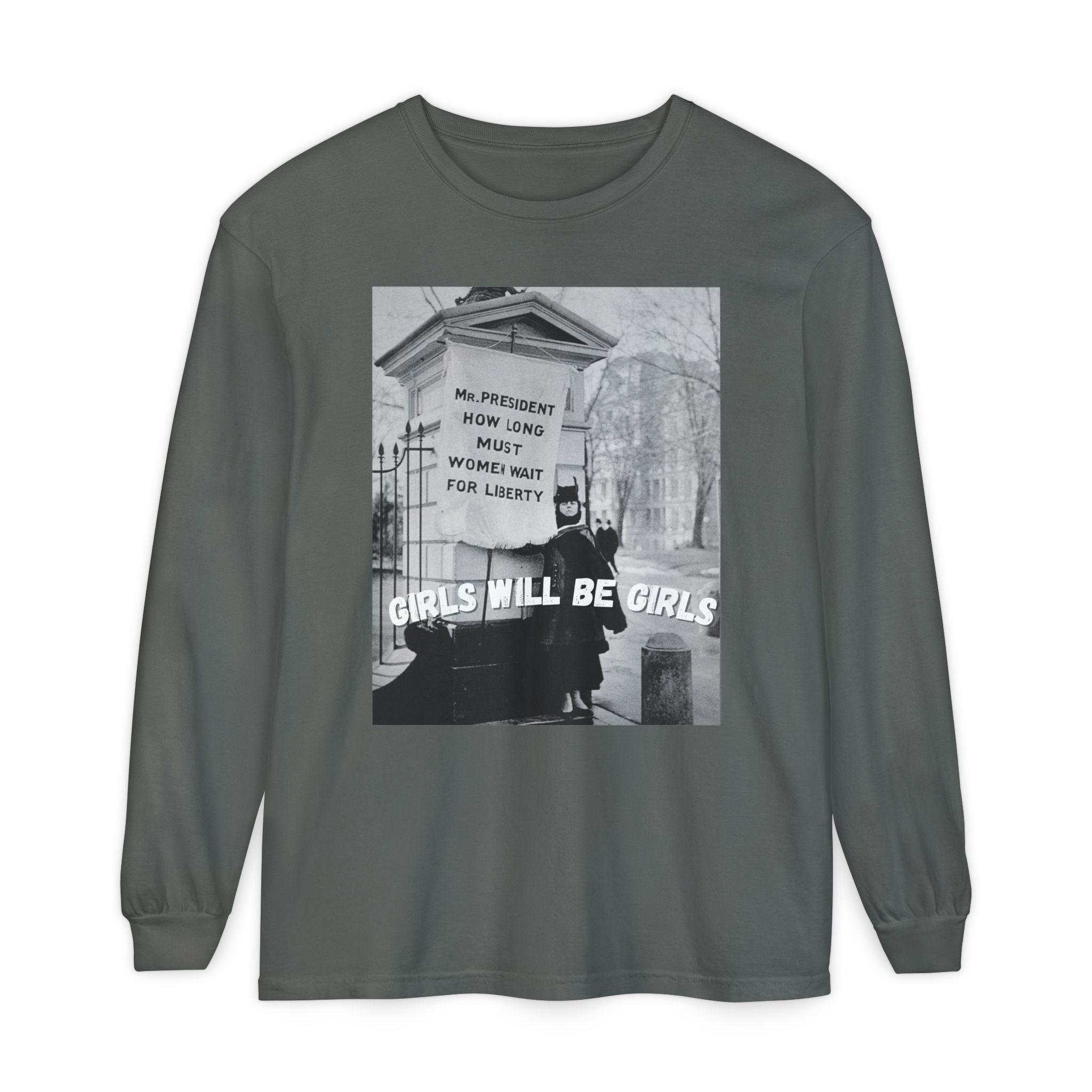
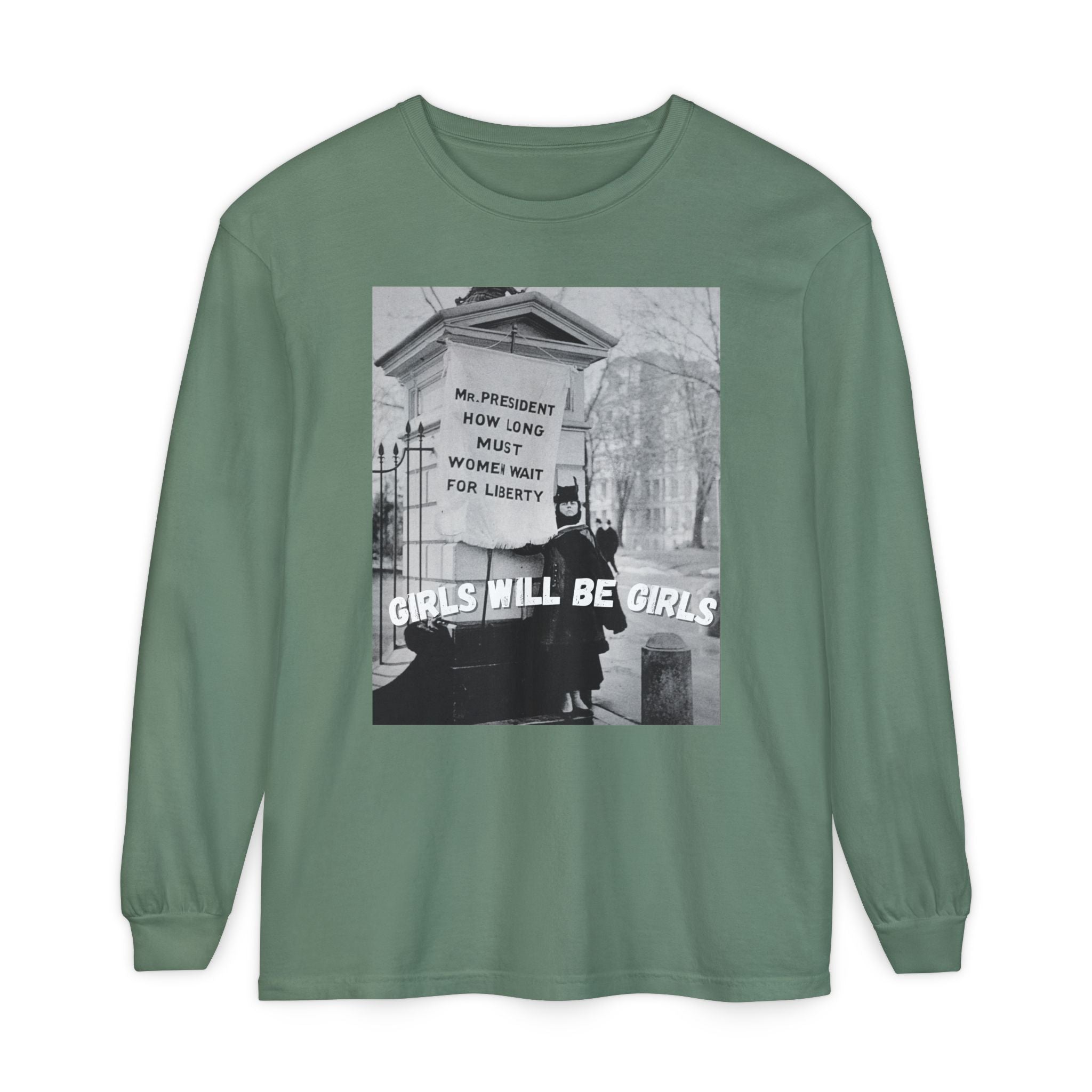
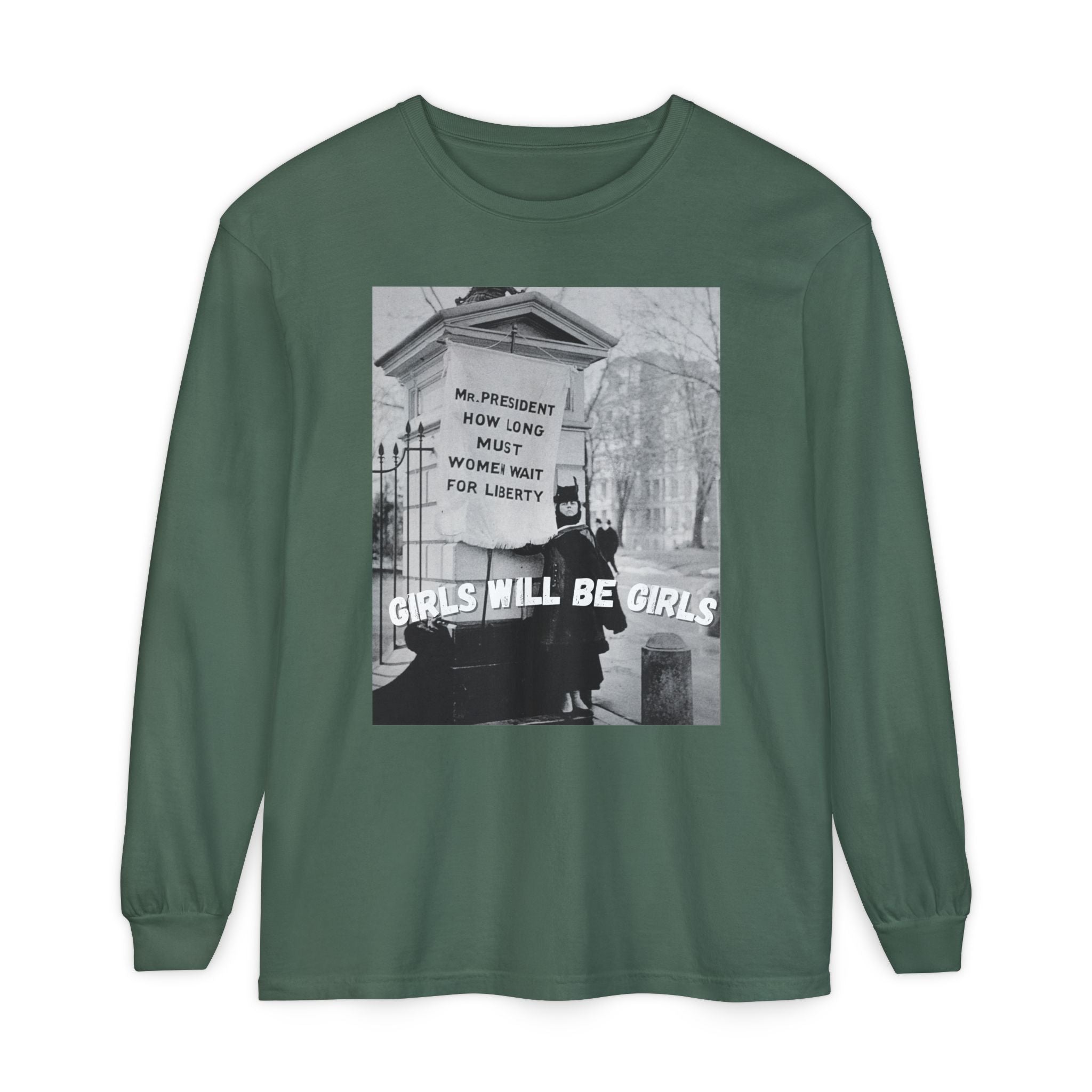
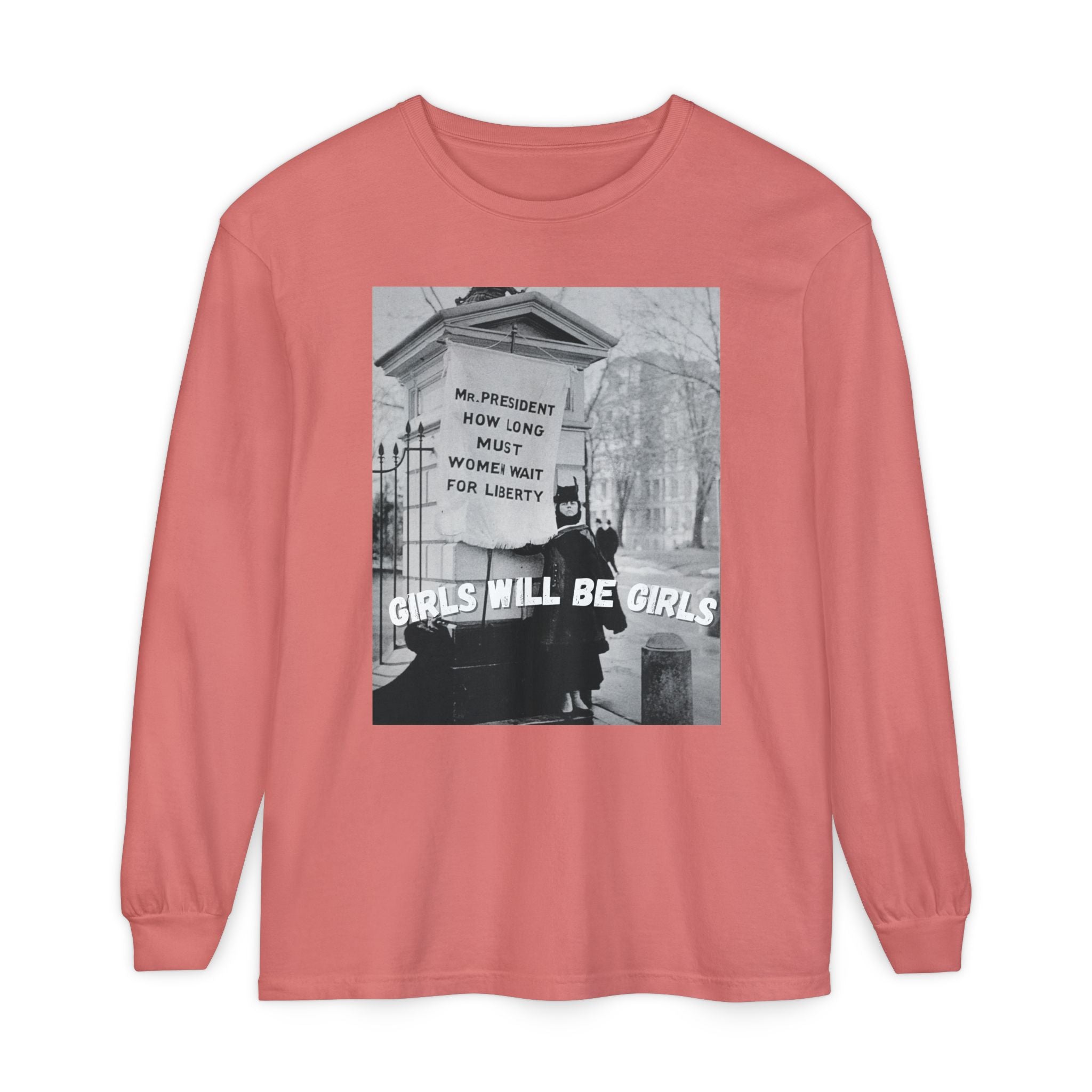
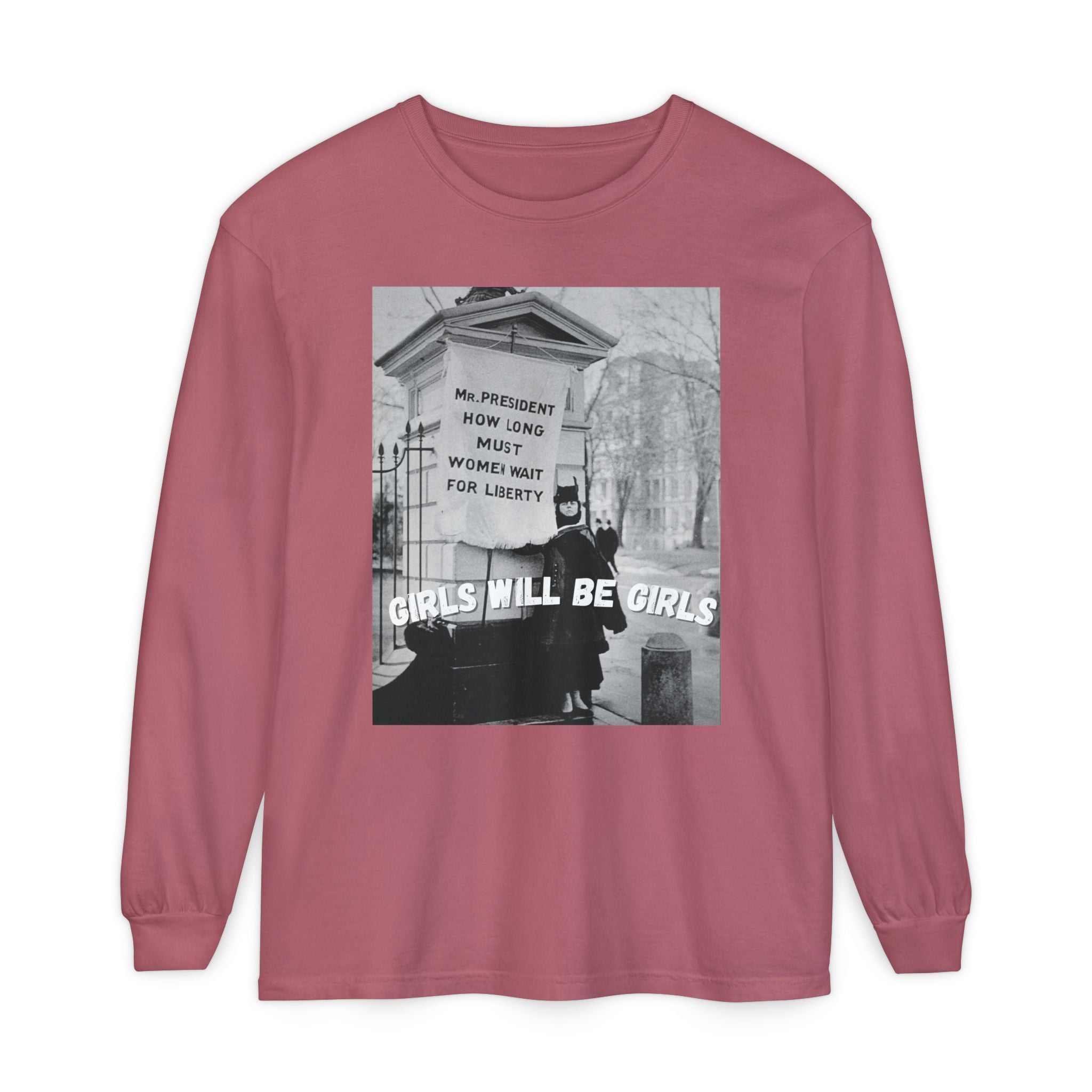
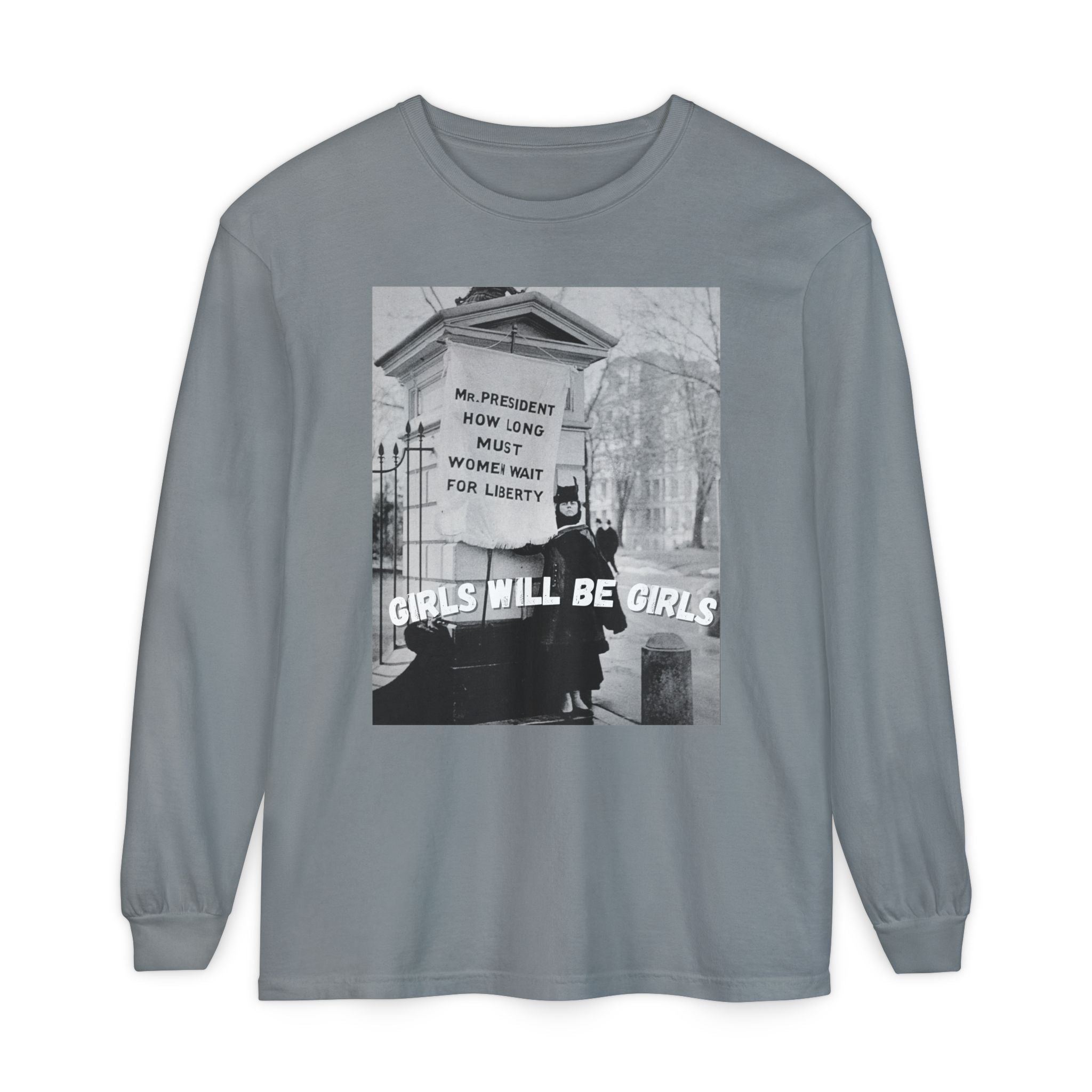
This photograph of "Silent Sentinel" Alison Turnbull Hopkins outside the White House poses the central question of the matter. Her banner reads: "Mr. President How Long Must Women Wait for Liberty." The NWP began peacefully protesting six days a week in January 1917, but encountered hostile crowds after the United States entered World War I in April. Dozens of women were arrested, many of whom were jailed and force-fed.
The resulting publicity and public outcry over their treatment is often credited with compelling President Woodrow Wilson to support woman suffrage. The protesters demonstrated for nearly 30 months until Congress passed a joint resolution proposing a 19th amendment on June 4, 1919."
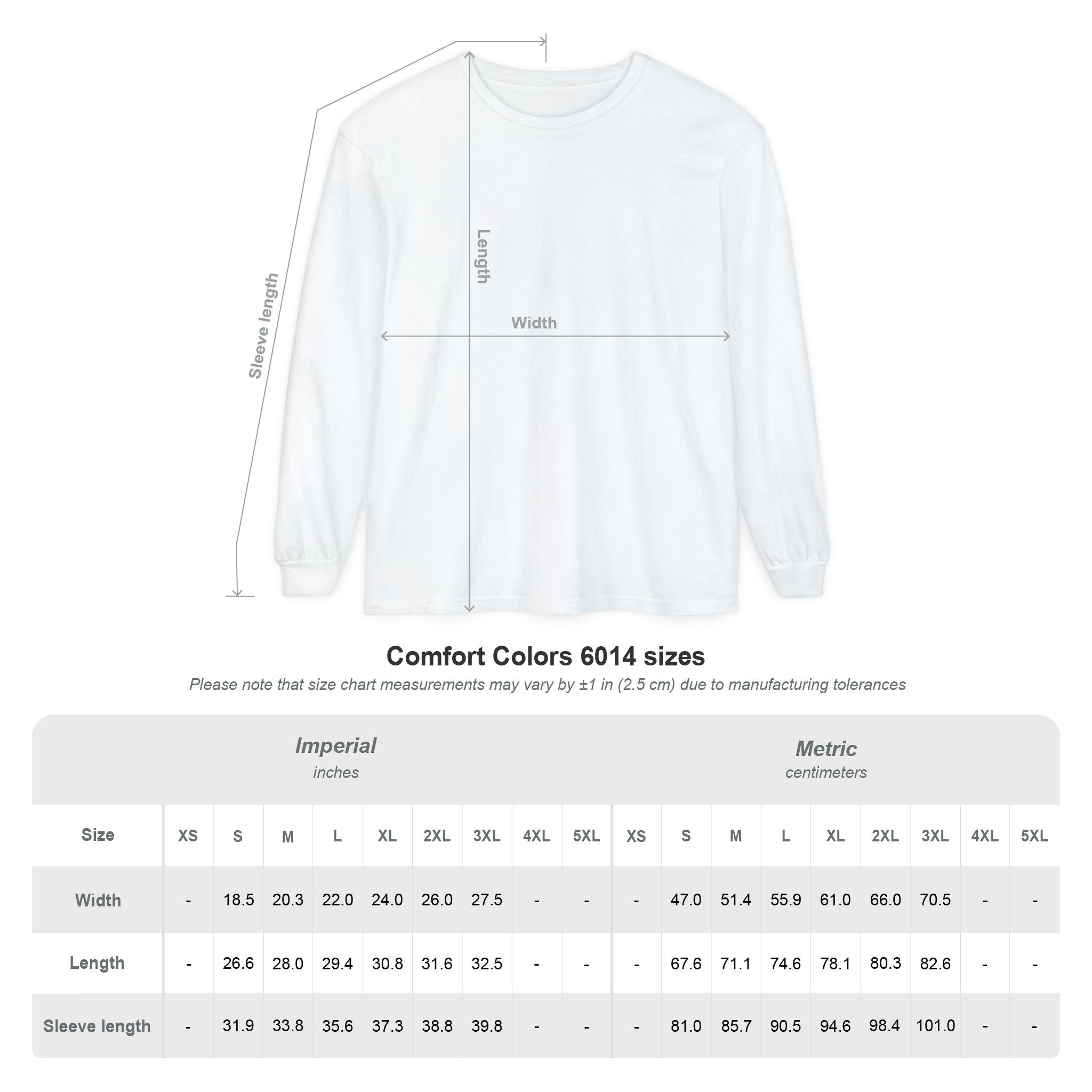
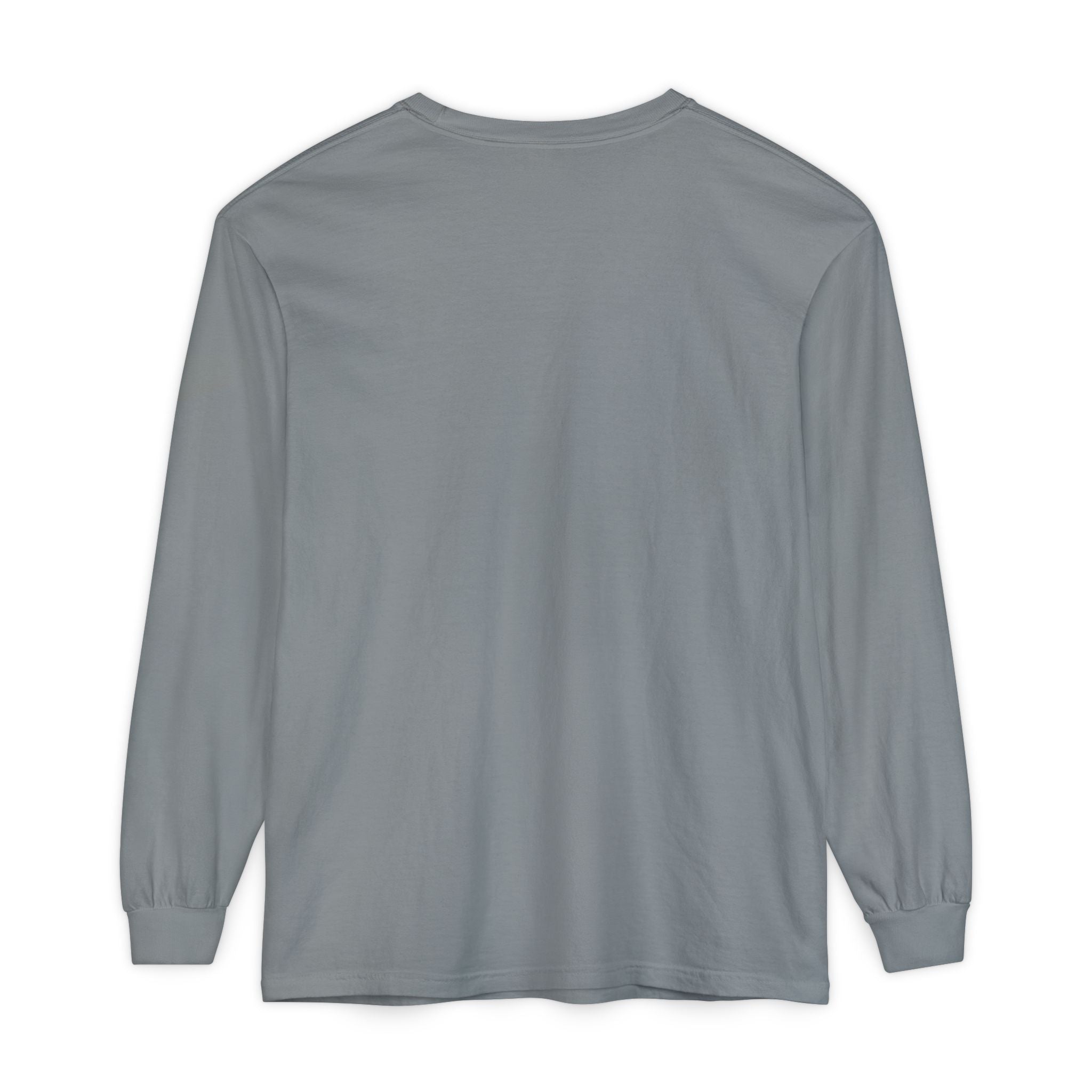
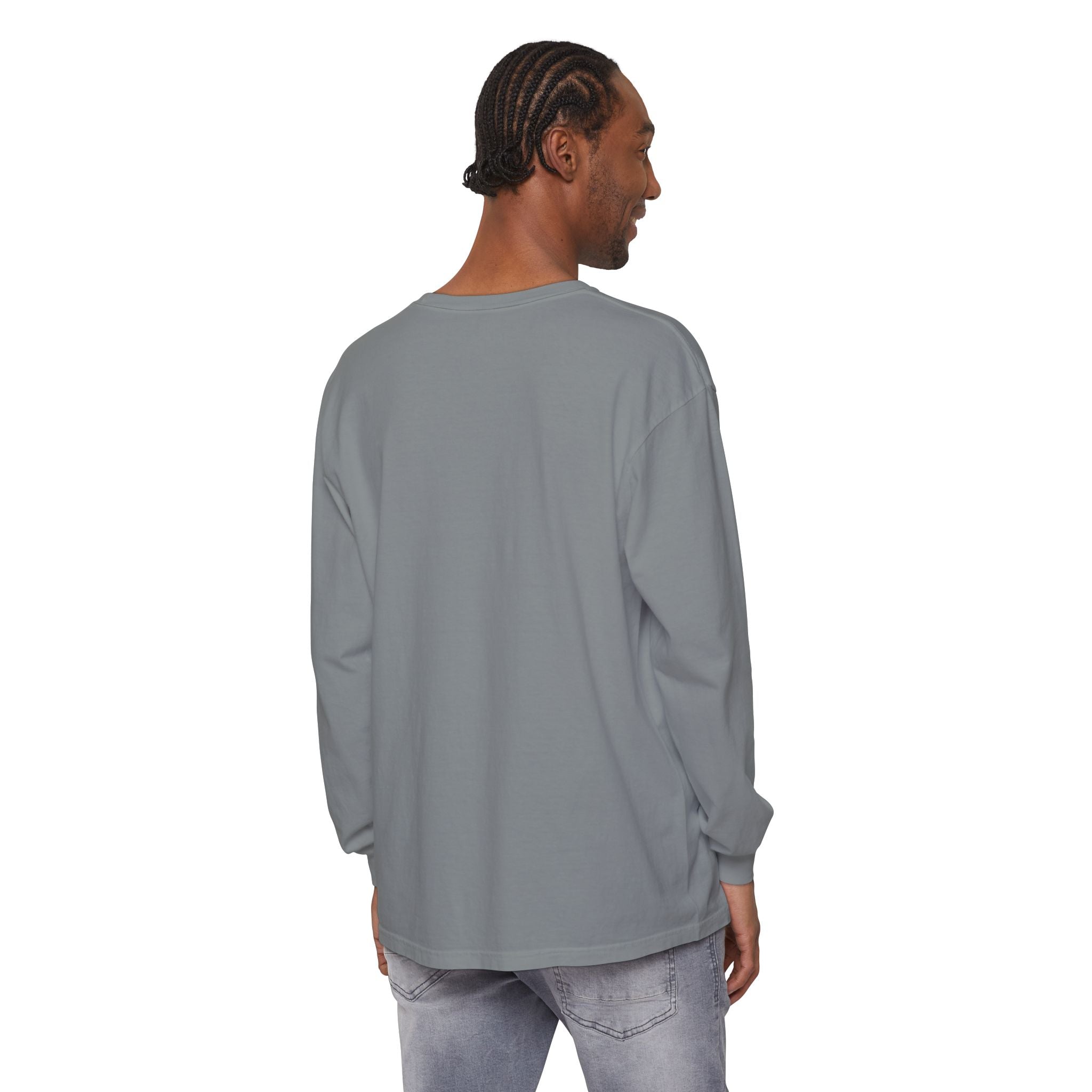
Product features - Garment-dyed finish for a soft, vintage hand and subtle color variation - 100% ring-spun cotton — smooth, strong fabric ideal for printing - Medium weight (6.1 oz/yd²) with classic fit for comfortable layering - Ribbed-knit cuffs and double-needle hems add durability and shape retention - Neck and shoulder twill tape plus sewn-in label for stability and long-lasting wear Care instructions - Machine wash: cold (max 30C or 90F) - Do not bleach - Tumble dry: low heat - Iron, steam or dry: low heat - Do not dryclean
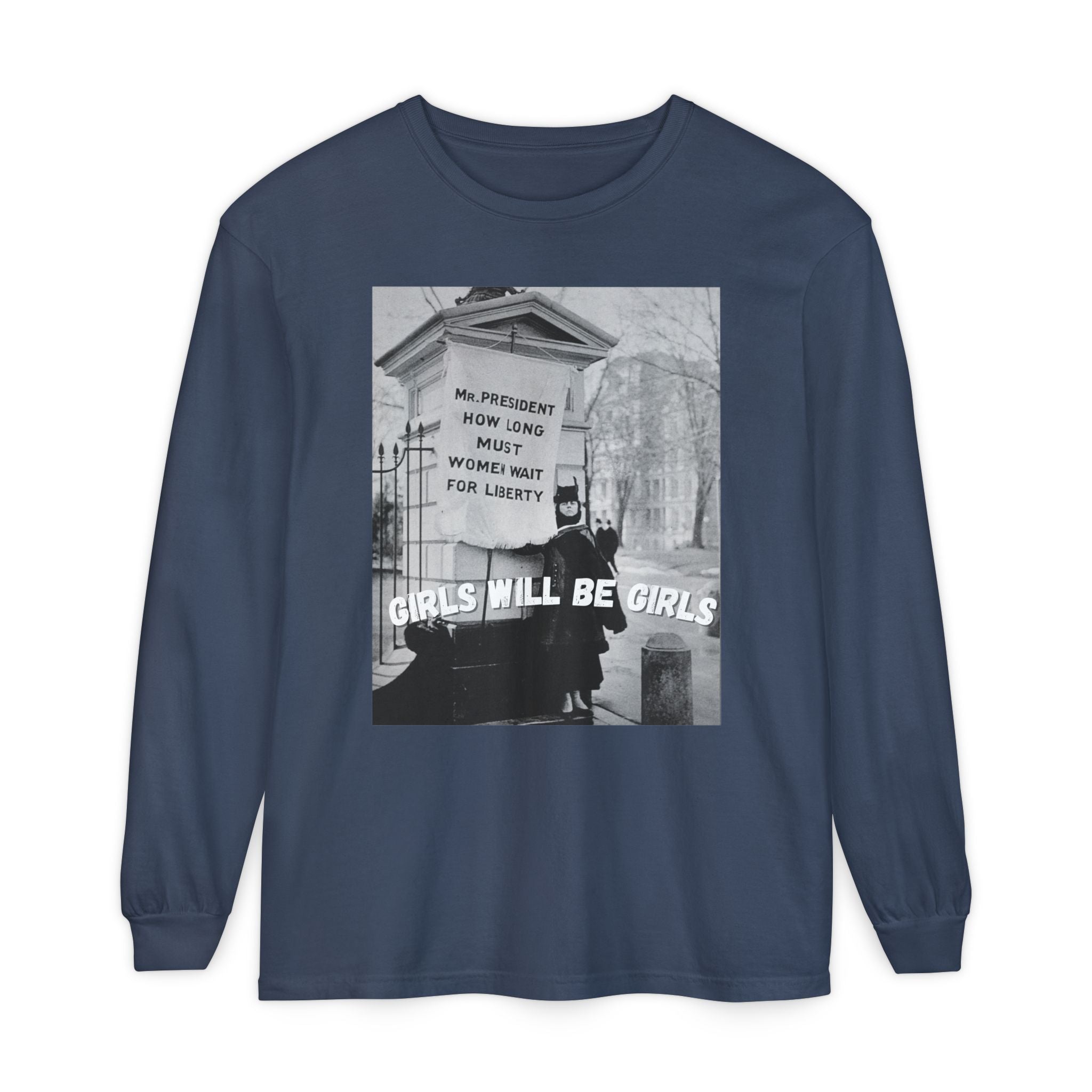
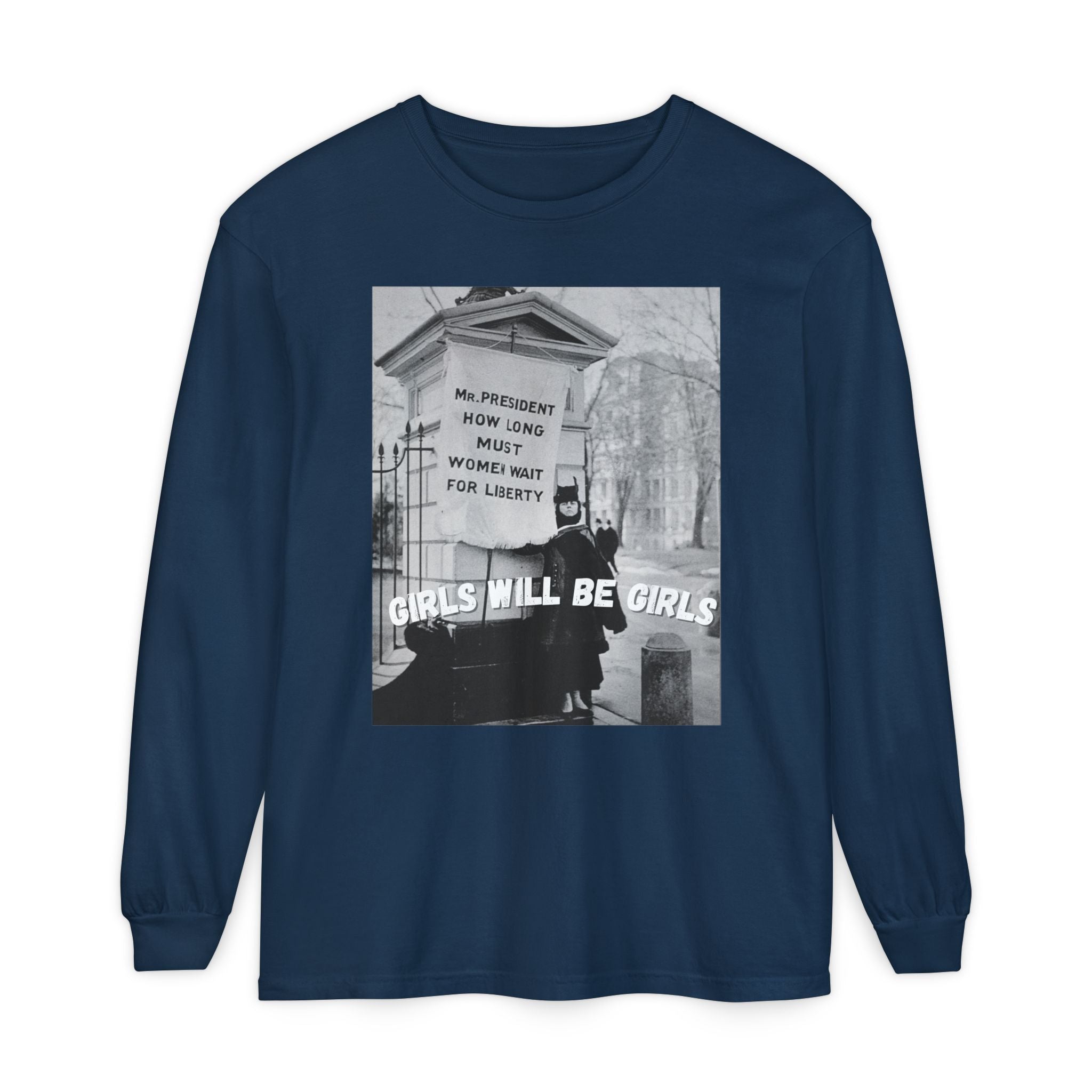
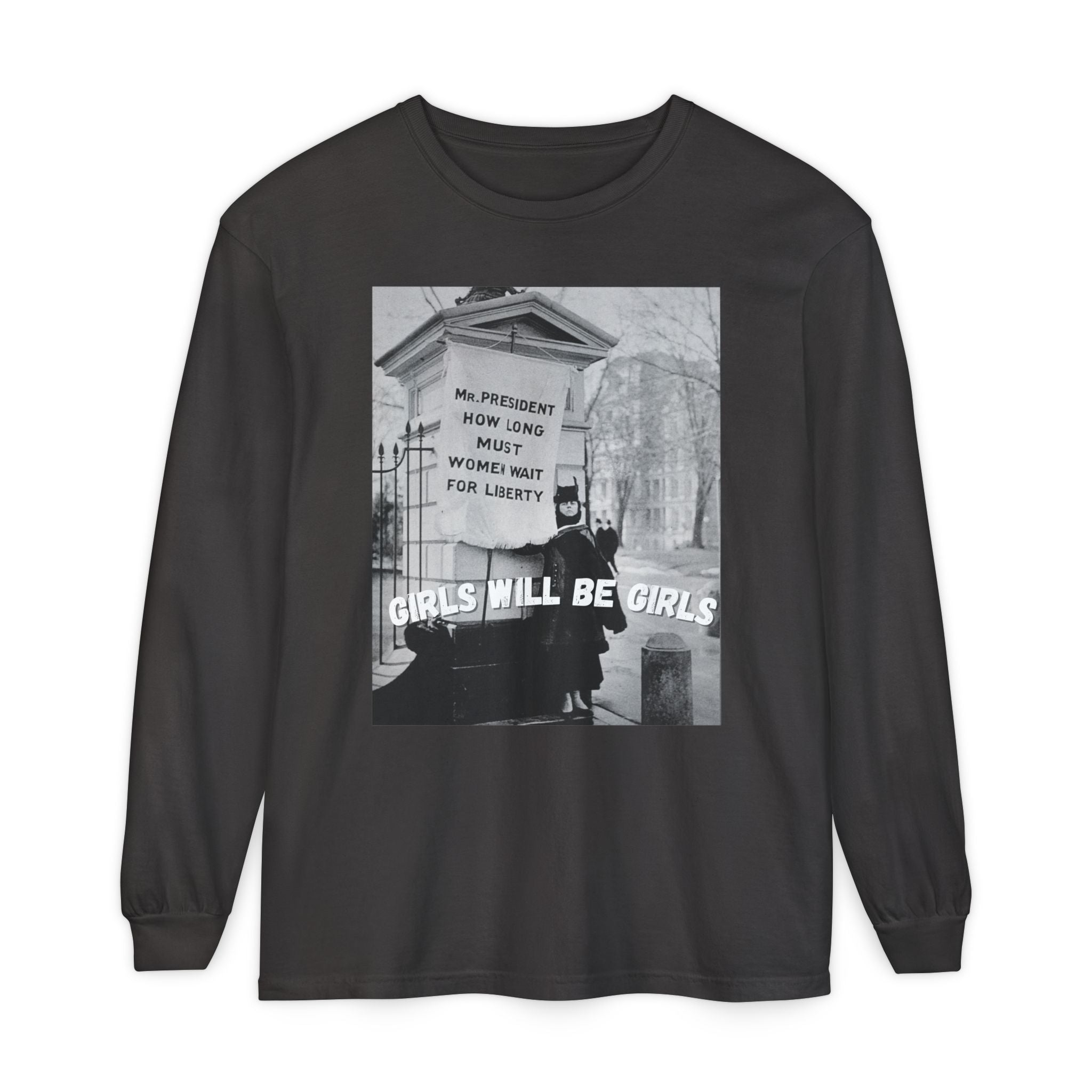
"Frustrated with President Woodrow Wilson's inaction on woman suffrage, the National Women's Party (NWP) began picketing in front of the White House to press for voting rights for women; they were the first political activists to do so.
This photograph of "Silent Sentinel" Alison Turnbull Hopkins outside the White House poses the central question of the matter. Her banner reads: "Mr. President How Long Must Women Wait for Liberty." The NWP began peacefully protesting six days a week in January 1917, but encountered hostile crowds after the United States entered World War I in April. Dozens of women were arrested, many of whom were jailed and force-fed.
The resulting publicity and public outcry over their treatment is often credited with compelling President Woodrow Wilson to support woman suffrage. The protesters demonstrated for nearly 30 months until Congress passed a joint resolution proposing a 19th amendment on June 4, 1919."
Product features - Garment-dyed finish for a soft, vintage hand and subtle color variation - 100% ring-spun cotton — smooth, strong fabric ideal for printing - Medium weight (6.1 oz/yd²) with classic fit for comfortable layering - Ribbed-knit cuffs and double-needle hems add durability and shape retention - Neck and shoulder twill tape plus sewn-in label for stability and long-lasting wear Care instructions - Machine wash: cold (max 30C or 90F) - Do not bleach - Tumble dry: low heat - Iron, steam or dry: low heat - Do not dryclean
Thanks for Being Here
I am Tracey Hope-Ross — Menopausal Gen Xer, Mom of two, Green Witch, artist, and woman who followed her rage like a thread and ended up here.
Find Your Magic exists for everyone who has ever been told to smile more, shrink herself, or soften her edges. I built it to uplift small makers and artists who are creating things that tell the truth — and to build a community of women who know the rage of age is not a problem to fix but a map to follow.
Find your rage. Find your magic.